

HomeThe numbers
The numbers
Where the record comes from.
The numbers behind the record, and where they come from.
| Reporting year | Identified | State average | Multiple | Clinicians reporting | State total |
|---|---|---|---|---|---|
| 2022 | 168 | 15.7 | 10.7× | 380 | 5,979 |
| 2023 | 215 | 16.8 | 12.8× | 414 | 6,969 |
| 2024 | 141 | 16.1 | 8.8× | 481 | 7,733 |
| 2025* | 194 | 16.6 | 11.7× | 473 | 7,837 |
* The 2025 figures are from the state’s report to dermatologists; the public edition hadn’t been published at the time of writing.
Source reports
Published by the state.
The Arizona Department of Health Services publishes melanoma reporting by physician every year and sends it to the state’s dermatologists. The public editions on the AZDHS site leave out the individual practice data. Each report covers the year before it.
- 2022Melanoma Reporting in Arizona, No. 2023-1 (June 2023)2022 reporting year
- 2023Melanoma Reporting in Arizona, No. 2024-1 (June 2024)2023 reporting year
- 2024Melanoma Reporting in Arizona, No. 2025-1 (May 2025)2024 reporting year
- 2025Melanoma Reporting in Arizona, No. 2026-12025 reporting year
How it’s counted.
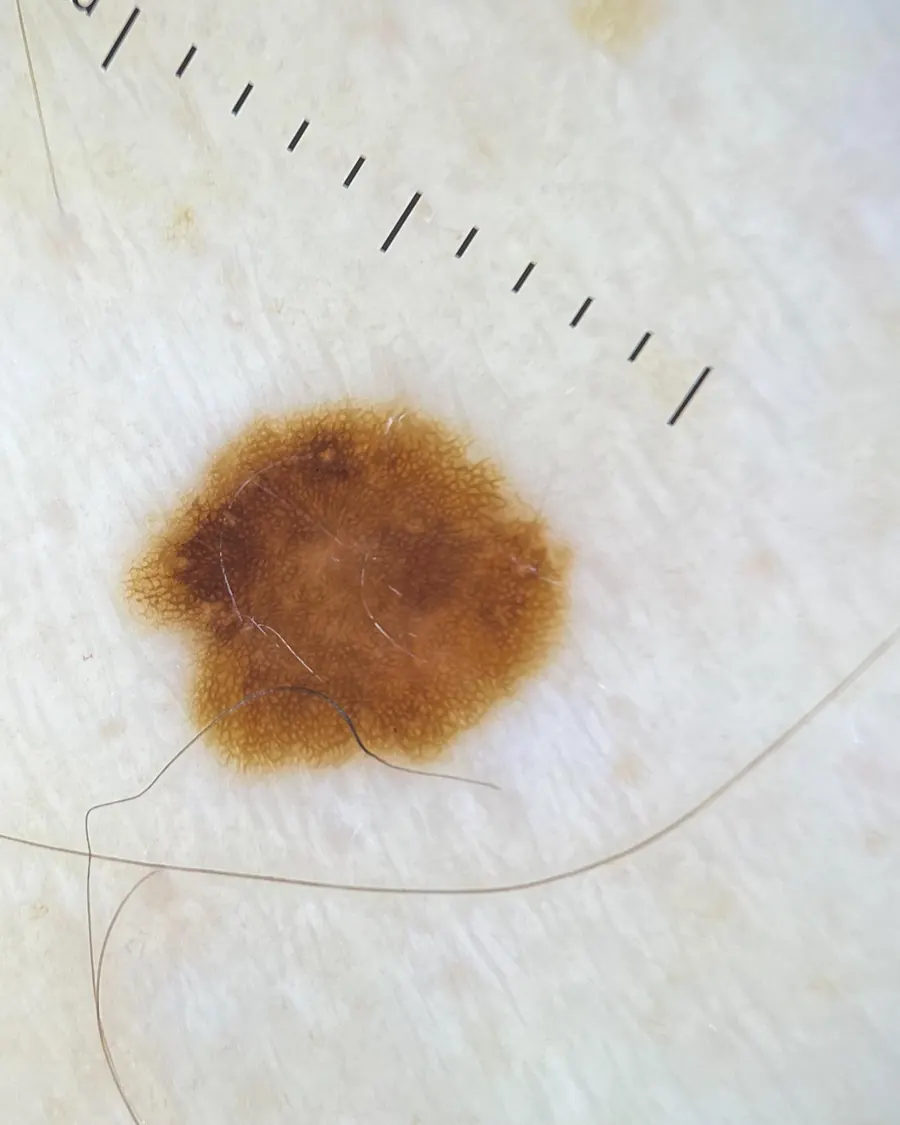
Arizona requires providers involved in the diagnosis or treatment of melanoma to report eligible cases to the Arizona Cancer Registry. Importantly, the annual clinician report does not necessarily credit the person who first identified the melanoma. The case is attributed to the “Reporting Provider” listed on the melanoma reporting form, and AZDHS specifically notes that a practice performing a subsequent excision may also be responsible for reporting the case.
Therefore, these numbers represent melanoma cases attributed to a reporting provider, not necessarily melanomas personally detected by that clinician.
Dr. Christopher’s count comes only from diagnosing melanoma, and it was the highest in the state from 2022 through 2025.
References
- 01McGuire ST, Secrest AM, Andrulonis R, Ferris LK. Surveillance of patients for early detection of melanoma: patterns in dermatologist vs patient discovery. Arch Dermatol. 2011;147(6):673-678. doi:10.1001/archdermatol.2011.135
- 02Watts CG, McLoughlin K, Goumas C, et al. Association between melanoma detected during routine skin checks and mortality. JAMA Dermatol. 2021;157(12):1425-1436. doi:10.1001/jamadermatol.2021.3884
- 03Hübner J, Schumann L, Eisemann N, et al. Population skin cancer screening and melanoma mortality rates. JAMA Dermatol. 2026;162(8):775. doi:10.1001/jamadermatol.2026.1527
- 04Arnold M, Singh D, Laversanne M, et al. Global burden of cutaneous melanoma in 2020 and projections to 2040. JAMA Dermatol. 2022;158(5):495-503. doi:10.1001/jamadermatol.2022.0160
- 05Landow SM, Gjelsvik A, Weinstock MA. Mortality burden and prognosis of thin melanomas overall and by subcategory of thickness, SEER registry data, 1992-2013. J Am Acad Dermatol. 2017;76(2):258-263. doi:10.1016/j.jaad.2016.10.018
- 06American Board of Dermatology. APPLIED exam. Accessed October 4, 2026. abderm.org
- 07Patel P, Khanna S, McLellan B, Krishnamurthy K. The need for improved dermoscopy training in residency: a survey of US dermatology residents and program directors. Dermatol Pract Concept. 2017;7(2):17-22. doi:10.5826/dpc.0702a03
- 08Arizona Revised Statutes §36-133. Chronic disease surveillance system; confidentiality; immunity; violation; classification. Accessed October 3, 2026. azleg.gov
- 09Arizona Department of Health Services, Arizona Cancer Registry. Instructions for completing the melanoma report form. Revised February 26, 2025. Accessed October 4, 2026. azdhs.gov
Tucson, Arizona
The record, displays the problem.
Melanoma is difficult to find. A tool can help, but the eyes behind the tool can be life changing.